War hits Russian petrol stations: 36-hour queues
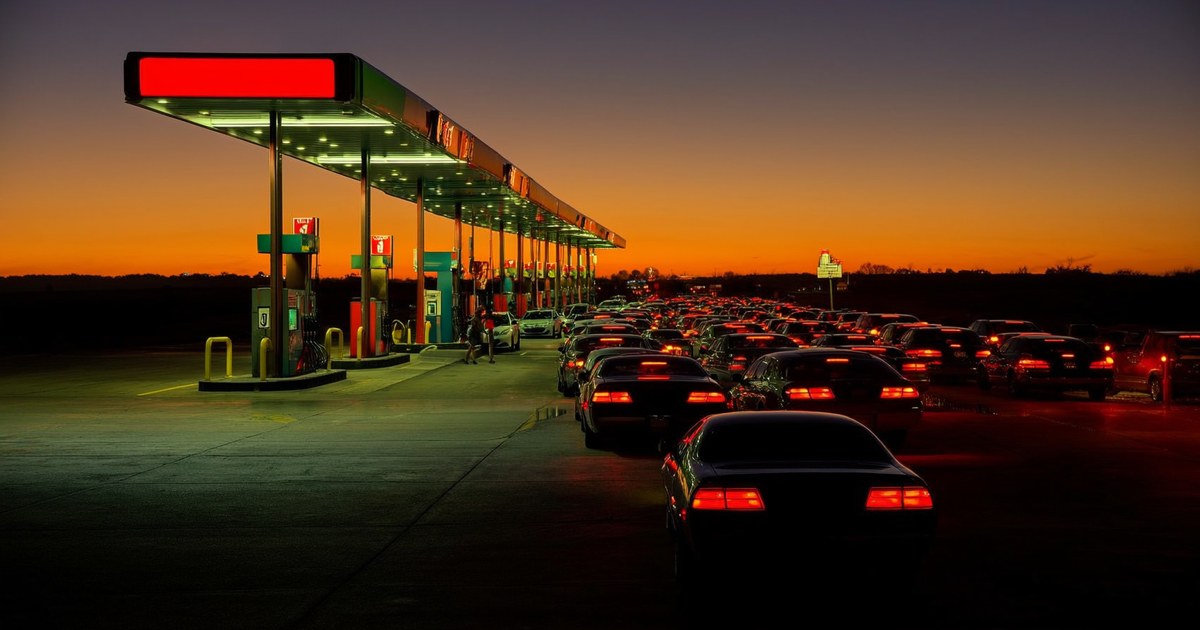
For years, millions of Russians have maintained a certain psychological distance from the conflict in Ukraine. War was television news, something happening far away, without directly touching daily life. But that bubble has just burst at petrol stations across the country, where vehicle queues lasting 36 hours or more are forcing the population to feel, for the first time so viscerally, the real cost of the conflict.
Ukraine strikes Russia's energy heart
The origin of the crisis is direct and devastating. Since May, Ukraine has intensified drone attacks against Russian refineries, with a reach that has surprised even Western analysts. The most emblematic case was on 6 July, when a drone hit the Omsk refinery—the country's largest—situated 2,500 kilometres from the Ukrainian border. That figure says everything about the operational capacity Kyiv has gained.
According to data from the Ukrainian General Staff cited by Kyiv Post, the attacks have already disabled 42.7% of Russia's projected refining capacity. A Bloomberg analysis goes further: 24 of the country's 34 major refineries have been hit in just one hundred days. Energy Aspects consultancy calculates that Russian crude processing has fallen to its lowest level in 21 years.
Chaos reaches the streets
The consequences for the population are as stark as unpredictable. Nearly 50 Russian regions had imposed restrictions on petrol sales by the end of June, and several have opted for rationing by licence plate: even days for some vehicles, odd days for others. The shortage directly affects around 50 million Russians, approximately 35% of the population, according to Financial Times calculations.
In cities like Chita, in the Transbaikalia region, people spend the night in their cars to not lose their turn. And desperation has reached the point where some drivers have started selling their place in the queue for sums of up to 35,000 roubles (around 400 euros). Tensions have led to fights between motorists, and regional authorities have had to improvise almost comical solutions: from a Siberian governor ordering hot food to be distributed to those waiting, to Cossacks in traditional costume controlling order at petrol stations, according to xataka.com.
Moscow denies the obvious, but acts as if it's critical
The Kremlin has opted for a contradictory strategy: minimising the crisis publicly while taking measures that reveal its true severity. Putin himself acknowledged on Sunday that there are "some shortages", although he insisted they are not "critical". His deputy prime minister, Alexander Novak, attributed the queues to panic buying and speculation, not a structural problem.
However, the Kremlin itself has banned exports of petrol, diesel and kerosene, and has dramatically increased its fuel imports from Belarus—an increase of 141 times in June compared to the previous year, according to the Financial Times. Few things reveal the true scale of a crisis better than what the government is trying to hide.
Even troops feel the collapse
The shortage has reached the front lines. Russian soldiers deployed in Ukraine have seen their fuel supply drastically reduced. Where they previously received what they needed to carry out their missions, now some units have just 10 to 15 litres daily per vehicle, when it was previously around 20 litres. The consequence is that military personnel have to walk up to 11 kilometres to obtain water and provisions.
What began as a distant war has become a reality that weighs every day in the petrol people cannot buy and the fuel that is not even reaching soldiers themselves. For Russia, that psychological shift could prove as important as any other tactical consequence.
Source: xataka.com