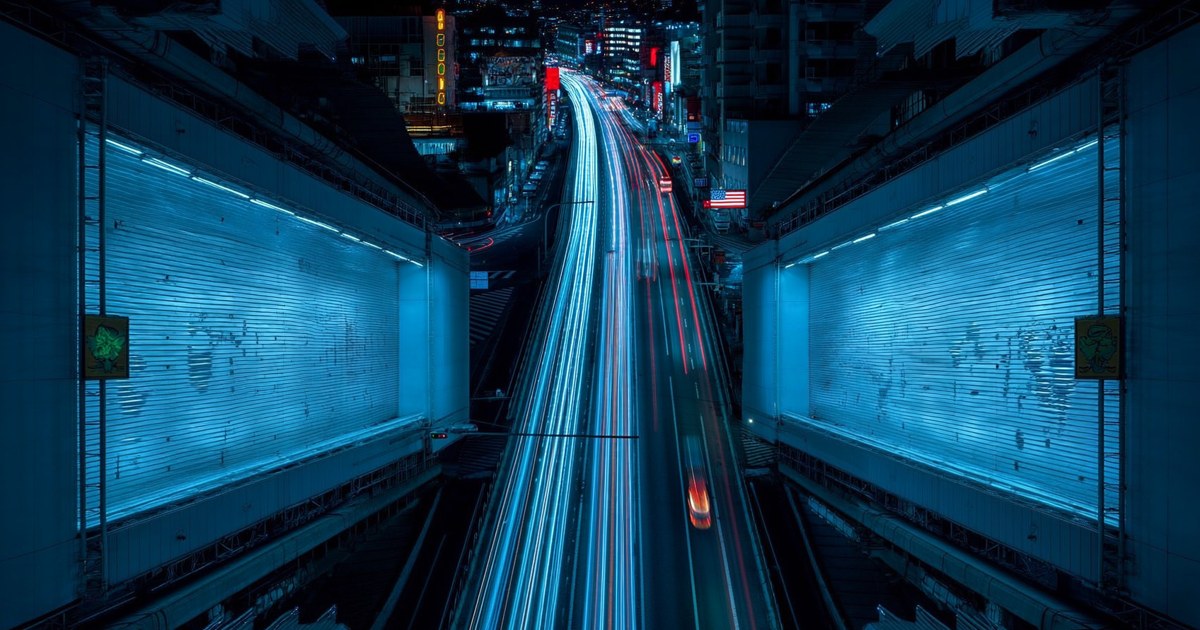
Tokyo has 4 times Madrid's population but almost no traffic jams. How?
Tokyo is home to 14.22 million inhabitants, almost four times more than Madrid with its 3.23 million. Yet while Spain's capital suffers from chronic congestion, the Japanese metropolis operates with an almost enviable fluidity. The secret is not the result of urban magic, but of radical political decisions made more than six decades ago. According to xataka.com, the system is called Shako Shomeisho and it is much more than an exotic name: it is the ultimate weapon against vehicular collapse.
Numbers that seem impossible
Population density is brutal in both cities: Madrid with 5,265 inhabitants per square kilometre versus Tokyo with 6,501. However, car use diverges radically. In Madrid it is common to see major thoroughfares congested; in Tokyo only 12% of daily trips are made by car, while 17% are by bicycle.
Most revealing is the proportion of vehicles per household. While nationally Japan has a car density similar to Spain—around 609-629 cars per thousand inhabitants—in Tokyo this drops to just 0.32 vehicles per household. Compared with the rest of the country (1.06 cars per household), the big city is an oasis of traffic without automobiles.
The ban that changed everything
The turning point came in 1957. Following the devastation of the Second World War, Tokyo grew chaotically, with buildings stacked on top of each other and narrow streets that hindered transit. The authorities made an unprecedented decision: absolute ban on street parking. In Europe this is simply abnormal. In Japan it is law, with fines around 1,200 euros per violation.
But the real revolution came a few years later with the Shako Shomeisho, implemented in 1962. It is a certificate that requires proof of legal parking before you can purchase a vehicle. Without guaranteed space to park it, you simply cannot buy one. It is an almost unbreakable barrier.
From chance to strategy
André Sorensen, urban planning professor at the University of Toronto, points out that part of this success has its origin in historical chance. Tokyo's uncontrolled growth was not a beneficial accident by design, but a consequence of accelerated reconstruction. What matters is that Japanese authorities knew how to capitalise on that reality.
The result was an oversized and highly efficient public transport system that absorbed mobility demand. When you buy a car in Tokyo, you not only face the price of the vehicle: you take on a daily battle against a system deliberately designed to discourage you from using it.
A lesson for Madrid?
Tokyo's lessons are not easily transferable to European cities with decades of entrenched car culture. But the question is inevitable: how far would we be willing to go to solve traffic collapse? Japan chose to sacrifice the freedom of the private car for the benefit of a breathable city. Spain has not yet dared such drastic measures.
Source: xataka.com