Resident fined €1,733 for planting trees in his neighbourhood without permit
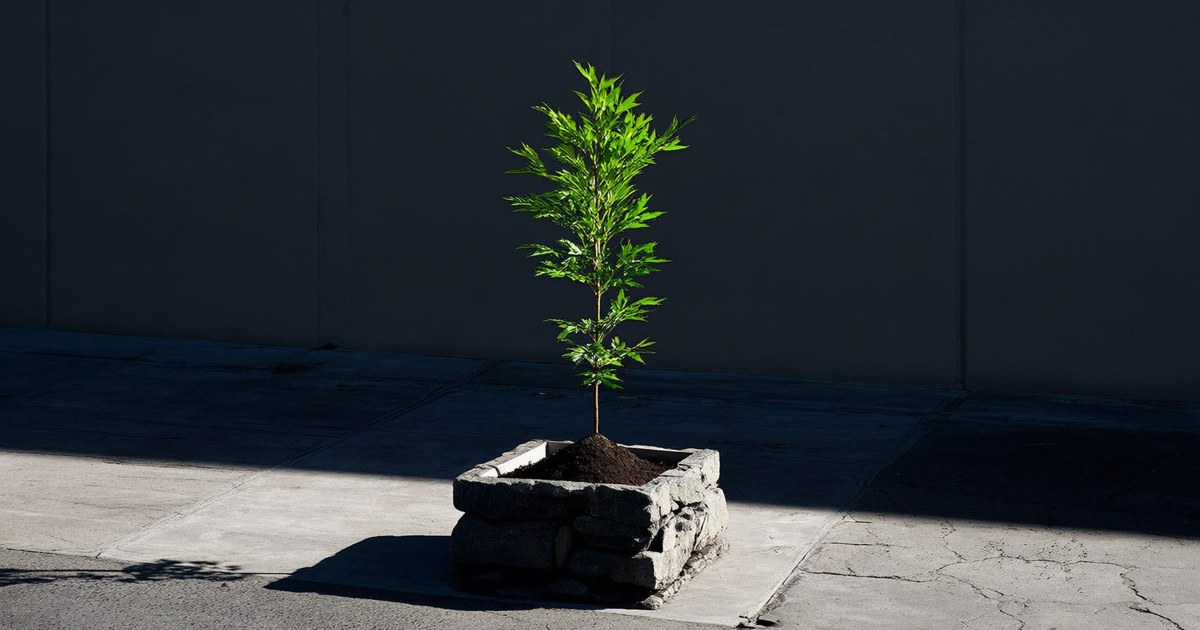
A resident of Mataró has received a fine of €1,733.39 for the offence of improving his neighbourhood. After years of complaints ignored by City Hall about the urban deterioration of Cós street, Miquel decided to take matters into his own hands: he planted five trees, repaired broken tiles and restored public benches. The municipal response was swift: a sanction that not only penalises the administrative infraction, but includes the operational cost of municipal crews to undo his work.
Five years of frustration without response
The story began in 2019, when Miquel started filing official complaints about the state of the area. For a thousand days he waited for some action from the Mataró council, but the response was silence. The street was losing trees, tree pits remained empty, the pavement was deteriorating and wooden benches were rotting without anyone intervening. Tired of seeing his area become a grey and uninhabited space, he decided to invest his own time and money.
According to xataka.com, Miquel spent €34.40 buying five trees that he planted in the empty tree pits. He also sanded and painted two deteriorated wooden public benches and replaced several broken tiles with new ones. He did it all with his own tools and several days of physical labour.
The bureaucratic reversal
Municipal inspectors did not hesitate to act. They drew up a record of what they called a "disaster" and issued the administrative ruling: a fine for breach of the local Public Roads Bylaw, which protects public domain from unauthorised alterations through bureaucratic channels. Up to this point, it could be understood as rigorous administrative procedure.
What is Kafkaesque is that the amount includes the operational cost of municipal crews to undo the work: removing the five healthy trees, returning the pavement to its previous state and restoring the degradation. In other words, Miquel pays to be punished by having his improvements undone. So far, it has not emerged whether he will appeal the sanction or has received political support from City Hall.
What science says about urban trees
While bureaucratic administration penalises greenery, urban research celebrates it. Major European studies show that streets with trees are on average 1°C cooler, but being in direct shade can mean a reduction of up to 10°C compared to asphalt exposed to the sun. This is not trivial: one third of premature deaths from heatwaves would be prevented with 30% tree coverage.
Urban trees filter tonnes of fine particles (PM2.5), reducing the incidence of asthma and respiratory diseases. Moreover, their presence on dense streets like Mataró's reduces residents' cortisol levels and improves mental health. Birds and pollinators recover, the local ecosystem improves and toxic exhaust fumes from cars are filtered out.
Who wants grey cities?
The irony is that green infrastructure planted by citizens is more efficient and economical to maintain in the long term than artificial cooling. Miquel not only improved his street: he reduced climate control costs, extended lives and healed the neighbourhood. And he was punished for it.
The uncomfortable question that remains hanging is: is it preferable to maintain bureaucratic control over degraded spaces, or to allow residents to take the initiative in improving their surroundings?
Source: xataka.com