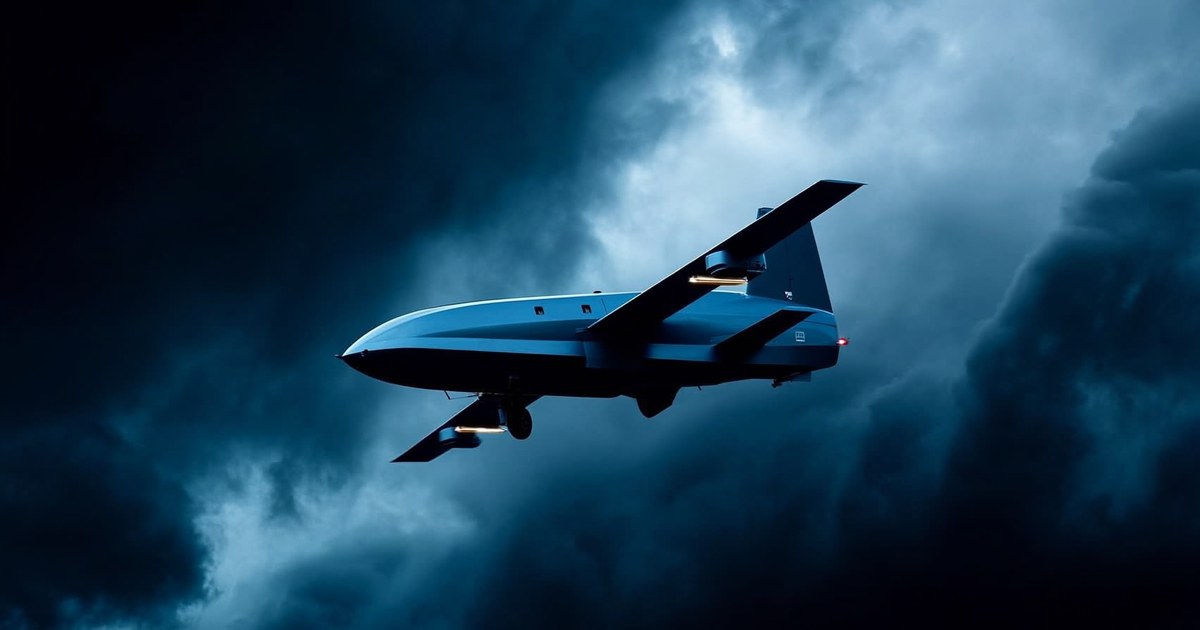
Europe bets $18 billion on drones as warfare enters new era
In barely two weeks, Europe has made a historic decision: drones are not the future of war, but its present. The NATO has launched a specific initiative for this technology, the United Kingdom has invested billions in anti-drone defenses, Germany has ordered tens of thousands of units, and a German company has just reached a valuation of $18 billion. It is no coincidence. It is confirmation that the Ukrainian conflict has rewritten the rules of modern combat.
Lessons from the Ukrainian battlefield
Cheap drones equipped with artificial intelligence have proven decisive in Ukraine. Capable of gathering real-time intelligence, extending the range of conventional weapons and operating with increasing autonomy, they have become the central element of modern warfare. Add to this the use of low-cost Iranian Shahed drones in the Middle East, a reminder that this is not a technology exclusive to Western powers.
The message is clear: whoever does not invest in drones gets left out of the game. And Europe, after decades of dependence on traditional weaponry, is not willing to arrive late this time.
An unprecedented investment in barely two weeks
The figures speak for themselves, according to xataka.com:
- NATO will invest more than $40 billion in anti-drone capabilities over the next five years, according to an announcement by Secretary General Mark Rutte.
- The United Kingdom will allocate 5 billion pounds (approximately $6.7 billion) to a national "drone transformation" programme within its Defence Investment Plan.
- Germany has ordered 50,000 drones through collaboration between Auterion (defence software) and Skyfall (Ukrainian manufacturer), in an operation totalling around €90 million.
- Helsing, the German company specializing in drones and military AI software, has closed a valuation round of $18 billion.
In total, we are talking about more than $60 billion committed in barely fifteen days. It is an unmistakable signal: the money and attention of European governments are no longer focused solely on tanks and aircraft, but on unmanned flying machines.
Software is the new military frontier
The most interesting aspect of this shift is not just the hardware, but what makes it work. Lorenz Meier, chief executive of Auterion, sums it up with precision: this is the first war being waged at a time when software already defines the battlefield.
Auterion's operating system, for example, allows drones to continue hitting targets even when they suffer electronic interference. This is no minor detail: in a modern war against adversaries equipped with advanced electronic warfare, software autonomy and adaptability can mean the difference between success and failure.
Helsing's valuation confirms where the industry is headed: the future of war will depend as much on software and autonomy as it does on traditional military hardware. Companies that master artificial intelligence applied to drones will have market power for decades.
Europe joins the race, but behind schedule
Just a year ago, Europe's technological superiority in defence seemed unquestionable. Today, the urgency of facts on the ground in Ukraine has forced governments and capital markets to act at breakneck speed. It is not a planned process; it is a race against time.
That said, Europe still has much to prove. While the US has been developing sophisticated combat drones for years and China is investing heavily in the technology, Europeans are trying to catch up. The question that hangs in the air is: will Europe not only catch up but lead the drone revolution before it is too late?
Source: xataka.com