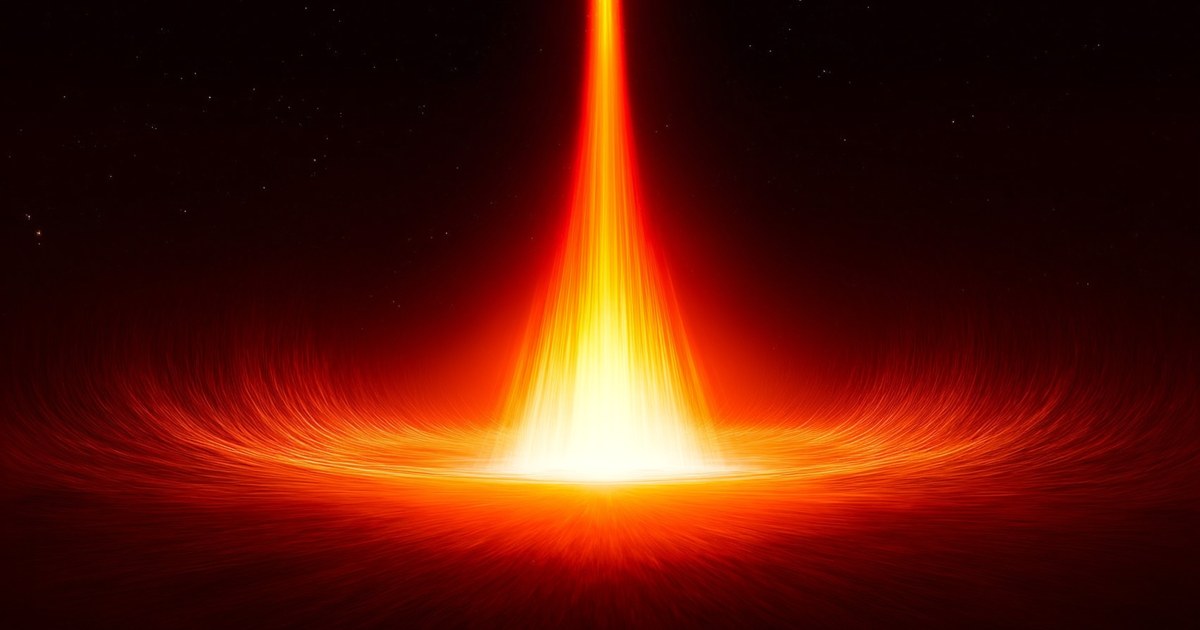
What happens when a star dies: the universe's most brutal explosion
Every night we look at the sky and see thousands of luminous dots that seem unchanging, eternal. What most people don't know is that many of those lights that reach us came from explosions so brutal that they released more energy than ten billion Hiroshima bombs combined. These are supernovas, and as explained by xataka.com, they represent the most spectacular final chapter in the lives of some stars.
The quiet life of a star: when balance is everything
For billions of years, a massive star maintains a delicate balance between two opposing forces. On one hand, gravity compresses it inward, trying to collapse all material towards the core. On the other, radiation pressure generated by nuclear fusion pushes it outward. While these two forces counterbalance each other, the star remains stable, shining steadily.
In the heart of each star, a continuous transformation process occurs: hydrogen nuclei fuse to form helium, releasing enormous amounts of energy in the process. It is exactly the opposite of a common chemical reaction. We are not talking about ordinary combustion, but nuclear fusion, a phenomenon millions of times more powerful than any reaction that could take place in an Earth laboratory.
The end: when fuel runs out
Everything changes when the inevitable moment arrives: the hydrogen in the core becomes depleted. Without fuel, radiation pressure can no longer counteract gravity. The core collapses on itself, compressing with such intensity that temperature skyrockets.
This extreme heat ignites a new fuel: the helium that had remained inactive begins to fuse, transforming into carbon and oxygen. But this process only occurs in the largest stars, those with at least eight times the mass of the Sun. Small stars simply die in silence, becoming cold white dwarfs.
While this first compression occurs, something else happens: the hydrogen in the outer layers of the star, which until then remained inert, also begins to fuse. The energy released causes the star to expand dramatically, becoming what astronomers call a red giant.
The explosion: the final death throes
But the chain of compressions and ignitions of new fuels continues. Each time an element runs out, another enters fusion, and the star compresses a bit more. The outer layers expand while the core contracts, creating unbearable tension in the stellar structure.
Finally, the inevitable moment arrives: the core collapses so catastrophically that it generates a shockwave that travels outward through the entire star. The explosion released is so colossal that it equals 1030 times the energy of the Hiroshima atomic bomb.
This is a supernova, and it is one of the most violent phenomena in the observable universe. The radiation released is so intense that it has been linked to two of the five major mass extinctions that have occurred on Earth, although terrestrial life is safe due to the enormous distances that separate us from other stars.
What remains after
Once the explosion dissipates, what remains depends on the original size of the star. If it was especially massive, it forms a black hole. If it was somewhat less colossal, the remnant becomes a neutron star, an object so dense that a teaspoon of its material would weigh billions of tons on Earth.
The next time you observe the night sky, remember that many of those lights you see began their journey to you decades, centuries, or even millennia ago, from celestial objects in which processes so tremendous occur that they defy our understanding. How many of those lights come from explosions we have yet to witness?
Source: xataka.com