Your neighbor celebrates the goal before you: the latency ruining the World Cup
When the next 2026 World Cup arrives on our screens, something awkward will happen in living rooms across Spain: your neighbor will celebrate goals before you do. It's not magic or a Telefónica conspiracy. It's latency, that small but decisive delay between what happens on the pitch and what you see on your television. And although it sounds like a minor technical detail, it can ruin your experience of a decisive match.
What is latency and why does it exist?
When you watch a match live, you're actually not watching anything live. There's always a gap, measured in milliseconds or even seconds, between the moment the ball goes into the net and the instant your brain registers it on the sofa. This delay is called latency, as as.com reports.
The culprit is not one, but several. The video and audio signal from any broadcast goes through a chain of processes: capture, encoding, compression, transmission and distribution. Each link in this chain adds microseconds to the image's journey. The more intermediate processes there are, the more delay you'll accumulate.
Why does your neighbor celebrate before you?
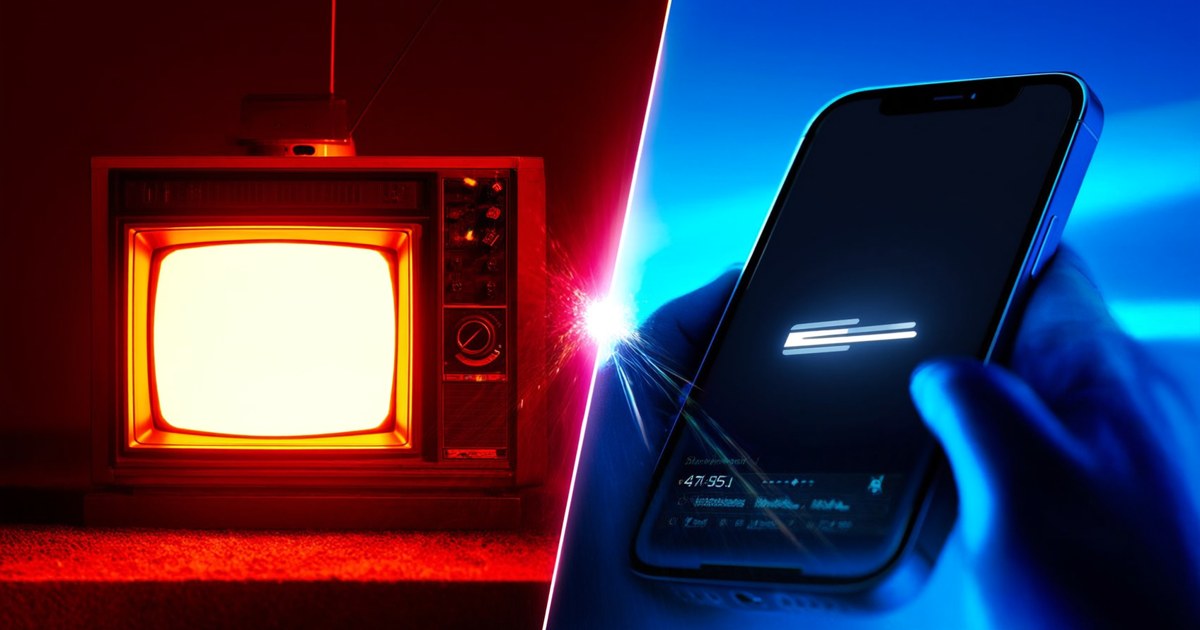
The system you use to watch the match makes all the difference. If all neighbors use the same channels, latency will be similar. But when you mix systems, chaos appears: some watch traditional television, others use streaming, some have faster fiber connections than others.
The problem is especially serious with streaming platforms. Although they seem more modern and convenient, they add additional processes to signal transmission. That means you can see actions with several seconds of delay compared to those with access to conventional television. It's the streaming paradox: more convenience, less speed.
The threat of spoilers on social media
In the age of social media, this becomes a real problem. While you're still waiting to see a goal, on Twitter, Instagram or WhatsApp groups it's already being celebrated. Those watching live on TV share their reaction, and the damage is done: your surprise, ruined.
It's especially frustrating at tense moments: a penalty in the 90th minute, a controversial red card, a goal making it 2-2 when you thought it was all decided. Latency transforms what should be a shared emotion into a fragmented experience.
How to avoid this during the World Cup?
The answer is as simple as it is blunt: traditional television remains your best option. The conventional channels (La 1, Antena 3, Cuatro or Movistar+, depending on who has the rights in 2026) minimize latency thanks to their infrastructure optimized for live broadcasts.
If you prefer streaming for convenience, at least be aware of the cost: you'll lose valuable seconds. And if you're watching the match with others, coordinate on the same system. It sounds obsessive, but when it comes to a goal in extra time, those seconds are an eternity.
What comes in 2026
Technology evolves, but compressed video transmission processes will continue to be a bottleneck. Perhaps in future editions latency will be reduced, but for now, the principle is clear: the simpler the transmission chain, the closer you'll be to the real live experience.
So when the next World Cup arrives, you know what to do if you want to avoid ruined surprises: tune into the traditional channel, silence your phone, and celebrate goals at the same time as everyone else. Because in football, seconds count.
Source: as.com