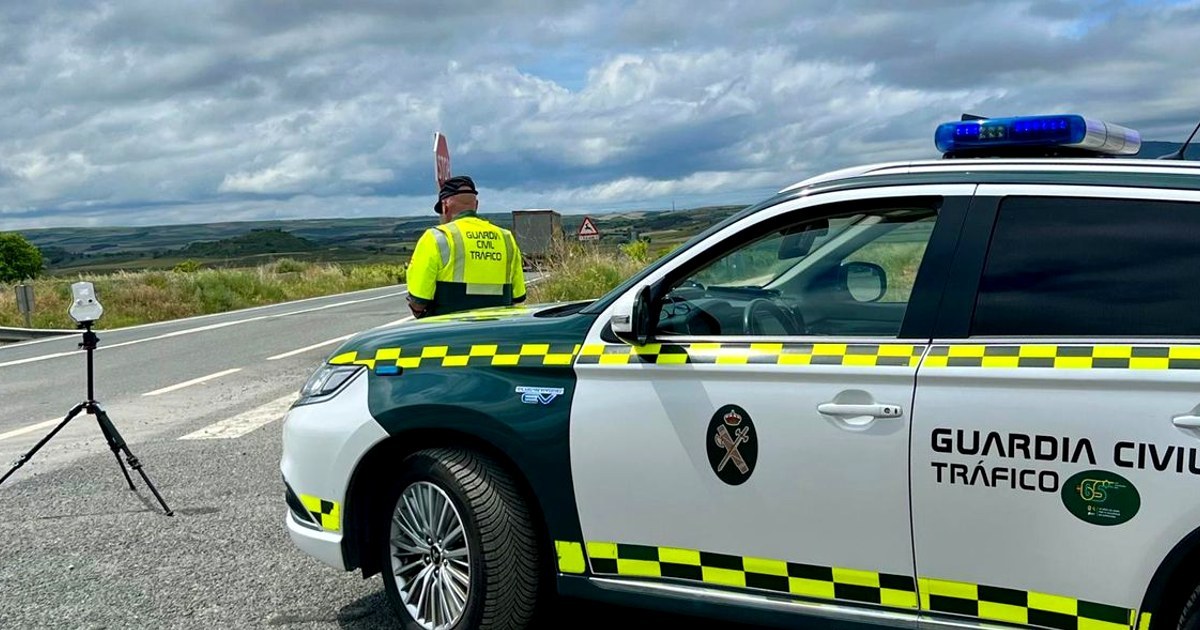
Photo: eldiario.es
Spain's 50 deadliest speed cameras empty drivers' pockets with record 246.8M euros
Spain's traffic authority's network of speed cameras has never generated more revenue: €246.8 million in 2025 from speeding violations, 14% more than the previous year. However, this record figure masks an uncomfortable reality for Spanish drivers: barely 50 speed cameras account for nearly half of all penalties, turning certain roads into genuine revenue-generating machines.
Spain's most ruthless ticket cameras
According to eldiario.es, based on a study by Associated European Motorists (AEA), the most devastating camera for Spanish drivers' wallets is located at kilometre 326 on the A-7 motorway, near La Canyada in Valencia. This device issued 90,766 fines in 2025, a spectacular figure considering it had only recently become operational.
The podium of the most active cameras is completed by other problem spots across Spain's road network. Second place goes to another Valencia device located at kilometre 7 of the CV-905 (Alicante province), with 72,557 fines. This is followed by the A-15 camera in Navarra, with 67,445 penalties; Tenerife's TF-2, with 49,641; and Málaga's A-7, with 45,050 fines.
Madrid also maintains a significant presence among the most active devices, especially on the M-40 ring road. Cameras located at kilometres 20 and 52 of this orbital motorway recorded 43,500 and 31,175 fines respectively during 2025.
Valencia, Madrid and Cádiz: the golden triangle of fines
At provincial level, the geography of speeding fine revenue shows a clear pattern. Valencia leads with €18.9 million, an 87% increase from the previous year. Madrid ranks second with €17.9 million (though down 5.1%), and Cádiz completes the podium with €16.5 million (22% more than in 2024).
Other provinces generating double-digit million-euro sanctions include Málaga, Alicante, Granada and Seville, all above ten million euros annually. The Valencian Community is thus consolidating itself as the country's main enforcement hub, concentrating a disproportionate share of Spain's traffic authority control activity.
The territories overlooked by cameras
At the opposite end of the map are provinces where speeding fines generate negligible figures. Ourense barely reached €1.35 million, followed by Cáceres with €1.69 million and Salamanca with €1.88 million. The difference with the main corridors is abysmal: Valencia collects nearly 14 times more than Ourense.
This geographic disparity is not accidental. Most of the most productive cameras are concentrated on motorways and major highways with high traffic volumes, mainly linking major cities and coastal areas. Interior territories, with less traffic, show significantly lower enforcement activity.
Extreme concentration: 50 out of 1,000 cameras
The most revealing finding in the AEA report is the brutal concentration of activity. Although Spain's traffic authority operates over a thousand cameras across the country, just 50 devices accumulated 1,342,285 fines during 2025, nearly half the national total.
This means that enforcement pressure does not reflect uniform supervision of driver behaviour, but rather the strategic placement of devices at maximum traffic points. AEA also argues that the increase in revenue does not reflect a widespread deterioration in driving standards, but rather the activation of new speed cameras in high-volume vehicle locations.
Road safety or revenue collection?
The question many drivers ask themselves is inevitable: to what extent do these cameras respond to road safety objectives or budgetary revenue needs? The data suggests that Spain's traffic authority prioritises points of maximum revenue capture, precisely where most vehicles circulate. If the goal were solely safety, placement would be more strategic in accident-prone areas, not necessarily on high-speed motorways.
For now, Spain's traffic authority has not published detailed data on how these funds are distributed or whether they are specifically allocated to road safety improvements. What is clear is that if you regularly travel through Valencia, Madrid or Cádiz, you should take extra precautions: the cameras are waiting for you.
Source: eldiario.es