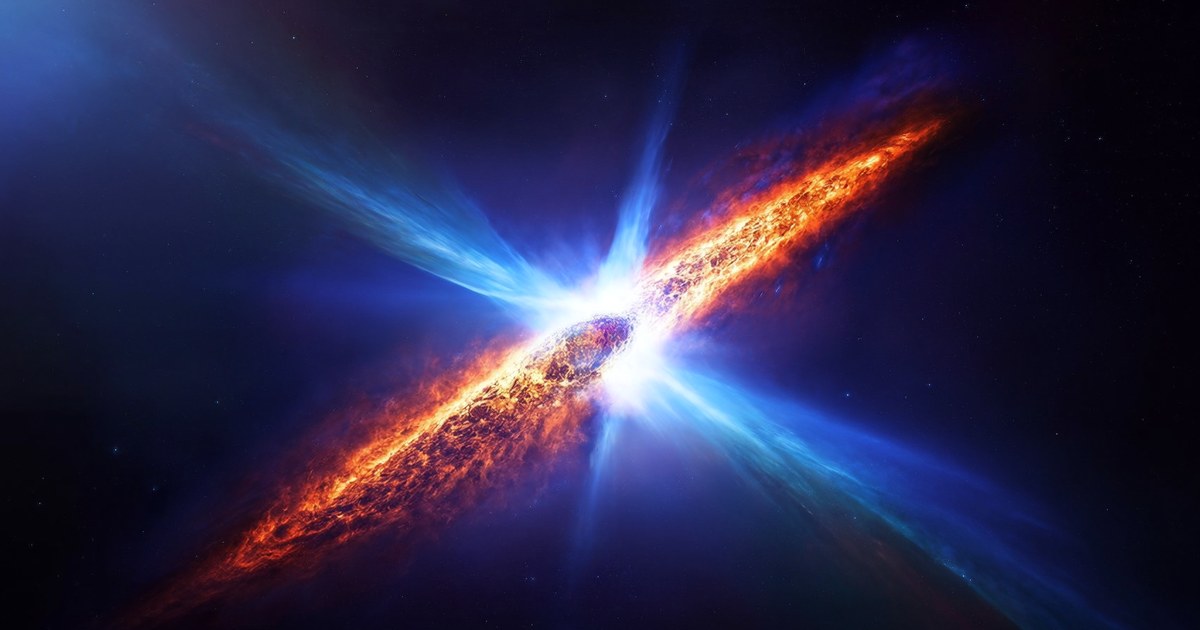
Twin supernovas: the discovery rewriting the universe's history
Millions of years ago, in the constellation of Gemini, two colossal stars were born together, bound by gravity. Now, after tens of thousands of years of cosmic solitude following their explosions, astronomers have achieved what seemed impossible: finding the remnants of both supernovas in the same binary system.
The discovery that changes what we know about twin stars
An international team led by Miltiadis Michailidis, a postdoctoral researcher at Stanford University, identified this unprecedented case by analysing more than 16 years of observations from NASA's Fermi Gamma-ray Space Telescope, together with data from the eROSITA X-ray observatory. The discovery, published in Nature Communications, reveals something scientists believed was almost impossible to document: the complete evolution of a massive binary system from its birth through to after its explosions.
As reported by eldiario.es, researchers have connected two seemingly unrelated nebulae: the Medusa Nebula (IC 443), one of the most studied supernova remnants in the Milky Way, and G189.6+3.3, a lesser-known nebula that has just revealed itself as the ghostly companion of the first.
Two monsters of light separated by tens of thousands of years
The numbers speak for themselves. Scientists believe the Medusa Nebula was born from the explosion of a star with between 15 and 25 times the mass of the Sun. Its companion star, responsible for G189.6+3.3, was even more massive: at least 20 times heavier than our star.
During their lifetimes, both were tens of thousands of times more luminous than the Sun. Then came the end. Astronomers believe the first star exhausted its fuel first and exploded, disintegrating the binary system and ejecting its companion into space. That second star continued travelling for thousands of years before it too burst, thus creating a current distance of between 30 and 50 light-years between the centres of both explosions.
The interval between the two supernovas was between 20,000 and 110,000 years, a span that, in cosmic terms, is practically an instant.
An open window to the evolution of massive stars
Why is this discovery so important? Because it allows astronomers to do something they rarely can: reconstruct the complete history of how the universe's most massive stars are born, live and interact. Almost all of them are born in pairs, bound together for millions of years, but documenting all phases of that relationship is extraordinarily difficult.
The two nebulae are located about 6,000 light-years from Earth, which means the light we see from them today began its journey when Neanderthals still inhabited Europe. Yet they are close enough that our modern telescopes can study them in detail.
After the explosions, scientists believe both stars could have become neutron stars, some of the densest objects in the universe. A teaspoon of matter from a neutron star would weigh as much as an entire mountain on Earth.
What comes next?
This system offers researchers a natural laboratory to understand how massive binary systems evolve. The questions they could answer in the coming years range from how matter is transferred between twin stars to when and why they explode. Each answer brings us closer to better understanding our own place in a universe full of these cosmic pairs dancing together in the darkness.
Source: eldiario.es